YouTubeBuy Indoor Slippers Spreadsheet Guide
YouTubeBuy Indoor Slippers Spreadsheet Guide
YouTubeBuy Indoor Slippers Spreadsheet Guide: Filter by Floor, Foot Shape, and Sole Structure
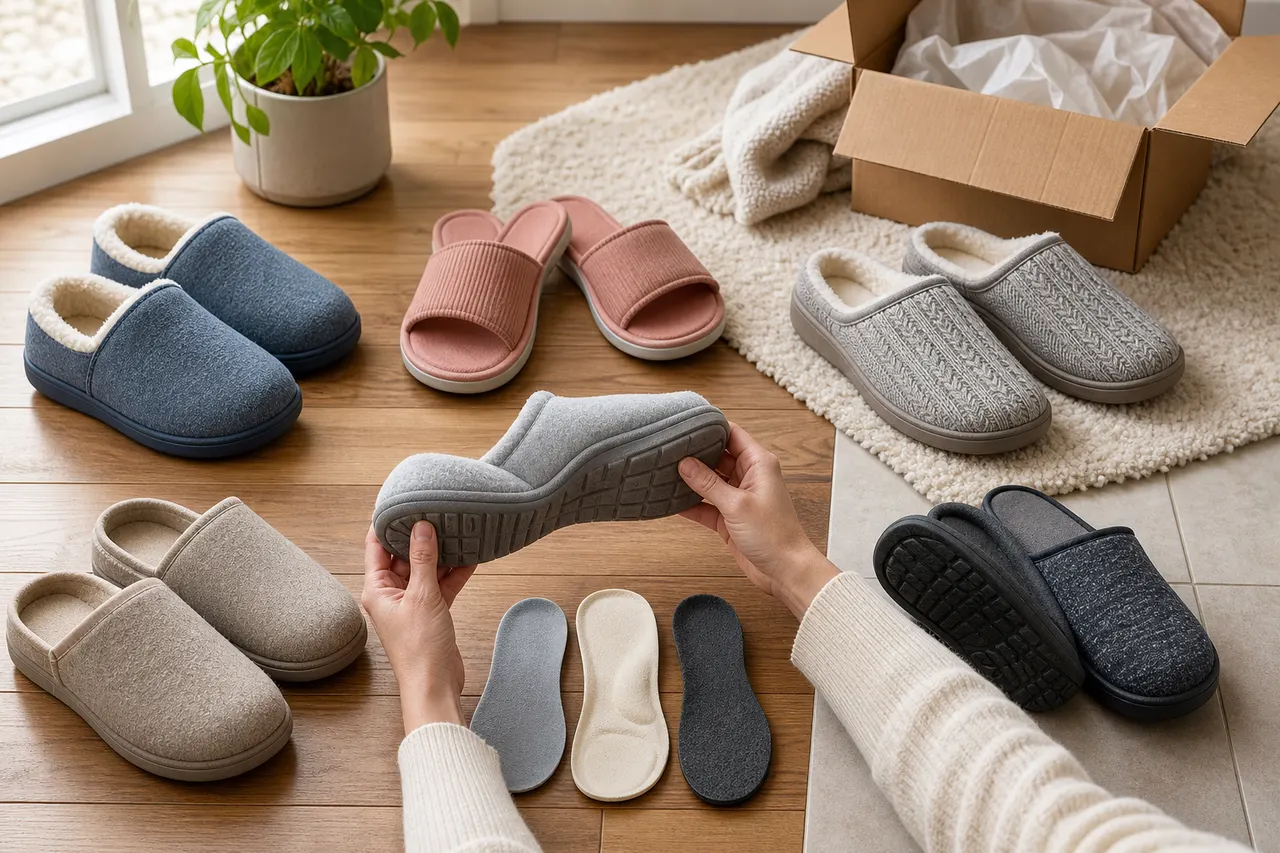
Indoor slippers seem simple, but when you actually place an order, three problems easily arise: the information in product spreadsheets is incomplete, different sellers have inconsistent sizing standards, and pictures cannot prove actual slip resistance and foot feel. The task of this guide is to help you organize slipper entries from the youtubebuy.net Spreadsheet into a verifiable candidate list, and then make decisions based on floor type, foot shape, sole structure, and warehouse QC images.
Fact-check date: August 27, 2026. This article does not have verifiable product samples, real-time prices, inventory, shipping costs, or return/exchange policies, so it does not recommend specific SKUs, nor does it treat spreadsheet entries as platform guarantees. Prices, inventory, purchase eligibility, sizes, shipping routes, and after-sales conditions should all be re-verified before payment. This content was produced by an automated editorial process and underwent checks for factual boundaries, originality, identity representation, image usage, and brand risk; it does not represent a real person's purchase, try-on, or receipt experience.
First Determine Anti-Slip and Quietness Needs Based on Indoor Flooring
First determine the floor surface the slippers will most often come into contact with, not the color. Tile, marble, or near bathroom doorways require clear sole tread patterns and sufficient ground contact area; wood floors and quiet residences also require attention to sole hardness, landing noise, and whether friction marks might be left behind; carpeted environments usually require more attention to whether the sole easily picks up lint and dust.
You can start by labeling each candidate entry with its main scenario:
Dry tile: Check whether the sole tread pattern is continuous and whether both the forefoot and heel have contact areas.
Near wet areas: Prioritize structures that are less absorbent and easy to wipe clean, but do not judge performance based solely on the word "anti-slip".
Wood floors: Record the sole material description, thickness, and edge shape, and list quietness requirements as a separate verification item.
Carpet: Pay attention to whether the sole grooves are too deep and whether the upper easily attracts fibers and dust.
Product images can only show the appearance of the tread, but cannot remotely prove wet friction coefficient, noise level, or long-term abrasion resistance. If the seller does not provide test methods or applicable conditions, record "anti-slip", "quiet", and "wear-resistant" as unverified claims, not as confirmed conclusions. 🧭
Filter Sizes Using Foot Length, Foot Width, and Instep Space
Do not just record the European or US size you usually wear. First measure the length of both feet and the widest part of the forefoot while standing and bearing weight, and use the larger foot as the base data. Measurement time, sock thickness, and season can also affect results.
In the candidate table, at least keep the following fields: foot length, foot width, seller size, corresponding inner length, shoe opening or upper structure, recommended allowance, size basis, and verification date. If the page only says "recommend choosing one size larger" without centimeter data, do not convert it into an exact inner length on your own.
People with high insteps need to pay special attention to the shoe opening and covering position. A fixed upper may press on the instep even if the length is sufficient; an overly wide opening may cause the slipper to slip off while walking. For closed-toe styles, also confirm whether there is reasonable space in front of the toes. When the size chart, product details, and seller's reply conflict, you should pause the order and request centimeter data specific to the exact style and size. 📏
Compare Applicable Scenarios of Closed-Toe, Open-Toe, and Heel Structures
Closed-toe styles can cover the toes and provide some warmth, but inner length, forefoot width, and toe box height are harder to judge from appearance, and it is easier to hide differences between left and right shoe shapes. Open-toe styles are ventilated and easy to clean, but are not suitable for scenarios requiring toe protection or warmth.
Slippers without heel support are convenient to put on and take off, but may be less stable when taking large strides or going up and down stairs. Styles with a heel, back strap, or adjustable structure usually fit better, but require extra checking of heel height, strap length, attachment points, and seams. When choosing, judge based on actual movement patterns: using them only for short distances in the bedroom is not the same need as frequent walking, doing housework, or going up and down stairs.
Build a Slipper Candidate List in the Spreadsheet
The Spreadsheet is more suitable for discovery and initial screening, and should not replace the product page, order page, or pre-payment confirmation. Each candidate should occupy one row, and save the original entry identifier to avoid mixing up similar images or styles from different sellers.
Field | Content to Record | Handling When Missing |
|---|---|---|
Product identification | Entry name, style, color, size, seller or source identifier | If unable to uniquely identify, remove from candidates |
Foot data | Foot length, foot width, sock thickness, selected size | Do not use daily shoe size instead of centimeter data |
Structure information | Closed-toe or open-toe, heel form, sole tread pattern | If image blurry, wait for supplementary information |
Material information | Page text for upper, lining, sole | Do not guess material based on appearance |
Transaction information | Current price, stock, currency, verification date | Re-confirm before payment |
Acceptance status | To verify, pending QC, acceptable, needs after-sales | Keep judgment basis and image number |
It is recommended to set an independent status for "uncertain" rather than directly giving a low score. Unknown information is different from confirmed defects: the former requires additional evidence, while the latter enters elimination or after-sales judgment. 🗂️
Check Upper, Lining, and Sole Information from Product Materials
Check the upper, the lining that contacts the foot, and the sole that contacts the ground separately; do not treat vague terms like "cotton slippers" or "furry slippers" as complete material descriptions. Textures in images can only support appearance observation, and cannot prove fiber composition, odor, softness, resilience, or breathability.
When checking, follow this order:
Check whether the product name, specification options, and detail description refer to the same style.
Record the material text, and mark whether it describes the upper, lining, or sole.
Check whether different colors use the same structure diagram and size chart.
Compare the main image, detail images, and selected specifications to confirm no other versions are mixed in.
Save the verification date before submitting the order, and re-confirm price, stock, and after-sales conditions.
If the page after clicking from the spreadsheet redirects, is empty, lacks a clear product name, or only displays a category collection, it cannot be considered valid product information.
QC Image Inspection: Left/Right Shoes, Seams, and Sole Tread
The purpose of warehouse QC images is to check whether the actual goods received differ significantly from the selected specifications, not to prove wearing comfort or true slip resistance. After receiving the images, first check the color, size marking, and style, then check the symmetry of the left and right shoes.
Key observations:
Whether the left and right shoes differ noticeably in length, toe profile, or upper opening.
Whether the binding, stitching lines, and back strap attachment points are continuous, without visible cracks or severe glue overflow.
Whether the sole tread direction and coverage are consistent, without obvious missing pieces, deformation, or abnormal wear.
Whether the size label is clear and consistent with the order specifications.
Whether the image angle, clarity, and lighting are sufficient to support judgment.
When finding doubtful points, cite the corresponding QC image and specific location to request additional photos, such as "Please take a front view of both soles side by side", rather than vaguely asking to "check quality". Do not conclude that left and right shoe sizes are inconsistent based solely on visual differences caused by camera perspective. 🔍
Identify Missing Information and Performance That Cannot Be Remotely Verified
Remote information usually cannot reliably verify wet slip resistance, compression after long-term wear, odor, stuffiness, actual landing noise, wear life, and deformation after washing. QC images also have difficulty proving sole hardness, arch support, or long-term adhesive strength.
Put these items in the "cannot be remotely verified" column and decide in advance whether the risk is acceptable. If a certain performance is a hard requirement for safety or user experience, and seller materials, platform pages, and supplementary photos cannot provide sufficient evidence, abandon that candidate. Especially do not upgrade promotional words, blurry patterns, or single product images into performance conclusions.
Styles involving brand logos also need separate consideration of intellectual property, shipping routes, and import restrictions of the destination country. Do not treat similar appearance as proof of authenticity, and do not request under-declaration, mis-declaration, or circumvention of inspection.
Finalize Selection Based on Cleaning, Storage, and Usage Frequency
The last round of screening should return to how you use them daily. Slippers with high frequency of use need to be easy to clean, dry, and store; styles for occasional guests should consider size coverage and hygiene management. Thick soles or wide toe boxes may increase storage volume, and highly absorbent linings may prolong drying time.
Before ordering, complete a decision checklist:
Do the floor and sole structure match, and is the unverifiable slip risk acceptable?
Is there specific evidence for foot length, foot width, and instep space, not just based on usual shoe size?
Do the product entry, detail page, specifications, and QC images refer to the same style?
Are the cleaning method, drying space, and usage frequency suitable for the material and structure?
Have current price, stock, shipping cost, taxes, return window, and destination country restrictions been re-checked?
This method can reduce wrong purchases caused by insufficient size evidence, specification confusion, or obvious appearance defects, but without specific candidate price, shipping cost, and return cost samples, it cannot honestly promise how much money can be saved. The added cost is the time for measuring, recording, and waiting for supplementary images, and it cannot eliminate the risk of remote judgment on foot feel, slip resistance, and durability.
It is suitable for buyers who are willing to first build a candidate list, wait for warehouse QC, and accept that some performance can only be confirmed after receipt; it is not suitable for people who need urgent delivery, must have tested slip resistance, cannot bear return/exchange restrictions, or have no conditions to verify sizes and destination country rules. ✅
Frequently Asked Questions About the Agent Platform
1. What does a QC photo refer to on youtubebuy.net?
Quality inspection is performed by a dedicated team for every drop-shipping order on youtubebuy.net. When your goods reach the warehouse, inspectors examine them and capture QC images. Typically three photos are taken to confirm that color, dimensions, specs, and count match your order. They also look for defects, except for electronics where only the external casing is checked. If problems like incorrect size, wrong color, or damage are found, the team immediately arranges a return to the supplier, ensuring you receive quality products.
2. What should a first-time user of youtubebuy.net keep in mind?
New users who access the Taobao agent on youtubebuy.net through the spreadsheet typically get a shipping discount coupon for new customers. Also, you should consult the beginner's step-by-step shopping guide.
3. Is the spreadsheet website associated with youtubebuy.net safe?
The spreadsheet site linked to youtubebuy.net does not gather any personal data; it functions only as a product listing for the agent platform. All buying and selling are handled on youtubebuy.net.
4. What kinds of products are available on youtubebuy.net?
youtubebuy.net provides a wide array of product groups, such as footwear, t-shirts, sweaters, hooded tops, denim, joggers, shorts, board shorts, factory clearance goods, padded jackets, baseball shirts, button-ups, caps, accessories, handbags, gadgets, eyewear, socks, undergarments, and popular collectibles.
Browse our latest products and find your next favorite item.