YouTubeBuy Coupon and Stable Training Shoes
YouTubeBuy Coupon and Stable Training Shoes
YouTubeBuy Coupon and Stable Training Shoes
If you're preparing to use a coupon on youtubebuy.net to purchase training shoes, the easiest mistake is not missing out on a discount, but buying a pair that isn't suitable for training just to meet the coupon requirements.
This article solves a specific problem: how to keep candidates that have basic training stability, sufficiently complete product information, and clear coupon applicability, and complete a final review before payment.
After reading, you should be able to do three things: first define your training scenario, then filter out shoes with insufficient structural evidence, and finally determine whether the coupon actually reduces your total cost.
This article does not apply to shoes that require professional medical orthotics, serious foot problems, or are specifically for competitive sports. Coupon amounts, eligible products, inventory, sizes, shipping costs, and platform rules may change; you should rely on the information shown on the youtubebuy.net page before payment. Verification date: September 22, 2026.
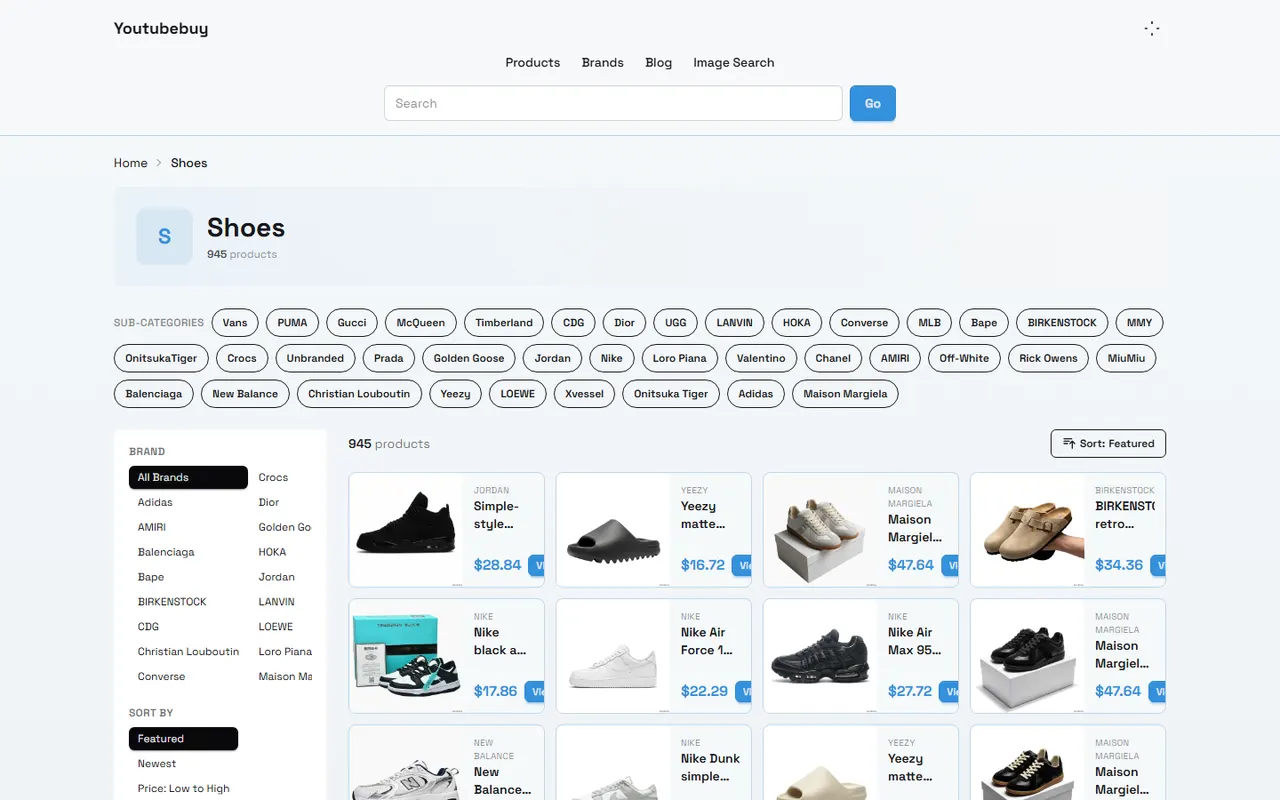
Figure: Reviewing training shoe candidates from three aspects: training needs, shoe structure, and coupon conditions
Define Your Training Scenario and Stability Needs First
Don't start by searching "cheapest training shoes"; instead, write down where you plan to wear them, what kind of training you'll do, and what problems you absolutely cannot accept.
For example, daily gym training, machine training, and light strength training usually require more attention to stability when standing, whether the sole platform wobbles easily, whether the heel stays in place, and whether the upper reduces foot slippage inside the shoe. If mainly for running, you need to also consider cushioning, gait compatibility, and running suitability, and cannot judge solely based on labels like "training shoe" or "sports shoe."
You can start by defining your task with the following sentences:
I need a shoe for light strength training and machine training.
I care more about standing stability and heel lockdown than getting the lowest price.
I can accept fewer color or brand choices, but not incomplete product information.
If a shoe is mainly for running, basketball, or outdoor trail, I won't add it to my candidates just because of a discount.
👟 The purpose of this step is to prevent coupons from shifting your focus away from training use and onto price. Discounts can only reduce purchase cost, not fix problems like a too-soft sole, unstable heel, or missing size information.
List the Necessary Conditions for Sole Platform, Heel, and Wrapping
When filtering candidates, prioritize structural information that is visible or clearly described on the page, rather than relying on vague adjectives. Stability can be broken down into several checkable items.
For the sole platform, check whether the sole is wide enough, whether the forefoot and heel are obviously too narrow, and whether the outer edge of the sole provides a clear support outline. A single front view is not enough to judge the entire structure, so it's best to check side, back, and outsole views.
For the heel, pay attention to whether the heel counter has obvious wrapping, whether the collar fits around the ankle, and whether the rear of the shoe appears prone to collapsing in the photos. Product images cannot prove actual hardness, but they help you identify whether there is enough information.
For wrapping, check the lacing area, upper segmentation, tongue, and toe box display. If the page only shows distant views and you cannot see the upper structure clearly, mark that model as "needs further confirmation" rather than directly judging it suitable for training.
You can divide the necessary conditions into three groups:
Must meet: use matches training scenario, size information visible, product images support basic structural judgment.
Should meet if possible: side, back, and outsole views available, lacing area and heel wrapping clearly shown.
Can compromise: color, decorative details, brand logos, or non-critical colorways.
Check Coupon Threshold and Eligible Product Range
Don't look only at the coupon's face value. Before payment, also check the minimum spend, eligible products or categories, validity period, whether manual claim is required, whether it stacks with other offers, and whether it changes the final payment amount.
If the page does not clearly state that a coupon applies to a specific candidate shoe, do not equate "sports shoe category" with "all sports shoes are eligible." Within the same category, there may be different sellers, product conditions, or promotional rules.
It is recommended to record item by item:
Coupon name or identifying information shown on the page.
Minimum spend amount and currency.
Eligible products, categories, or seller scope.
Product amount, shipping cost, and estimated total payable before and after using the coupon.
Coupon validity period and final status on the payment page.
🎟️ If a coupon requires adding items to reach the threshold, calculate the extra amount needed to meet the threshold first, then judge whether you are truly saving. A coupon's nominal discount does not mean the total order cost will definitely decrease.
Distinguish Between Real Needs and Shoes Added Just to Meet the Threshold
Adding an extra pair of shoes just to reach a coupon threshold can cause three problems: you pay for unnecessary items, you increase size or return/exchange risks, and you may complicate the package handling process.
It's easier to judge if you divide candidate items into two categories:
Real need: you will definitely use them in the future, and the use, size, and structural information all meet requirements.
Threshold filler: mainly added because the price is low or it helps meet the coupon threshold, but there is no clear usage scenario.
If a pair of shoes is only added to reach the threshold and has significant size uncertainty, missing structural information, or mismatched use, it's usually not worth keeping. Even if the coupon makes it look cheap, you may still end up bearing the cost of unused items, returns/exchanges, or re-purchase.
You can use a simple calculation to judge:
Actual savings = total order amount without coupon − total order amount with coupon
But you must also consider the extra item cost, shipping changes, possible return/exchange costs, and the risk of not being able to use the item. If the item added for the coupon has no clear purpose, the actual savings may only be a number on paper.
Compare Structural Evidence and Information Completeness of Candidates
The more candidates you have, the more you need to compare them using the same criteria, rather than deciding by first impression. The following table is suitable for building a screening record in a spreadsheet:
Check Item | Evidence to Keep | Situation to Watch Out For |
|---|---|---|
Training use | Page use matches actual training scenario | Only says "sporty style" or no usage description |
Sole platform | Side, outsole, or multi-angle images support judgment | Only front view, cannot see sole outline |
Heel wrapping | Back view, collar, and heel area clearly visible | Heel blocked or image excessively cropped |
Upper lockdown | Lacing area, tongue, and upper segmentation visible | Only vague words, no detail images |
Size information | Size chart or measurement instructions verifiable | Only vague size, missing units or range |
Coupon conditions | Eligible products, threshold, and final amount clear | Only discount promotion, cannot confirm before payment |
Information completeness is not a substitute for stability, but it determines whether you can make a responsible judgment. If multiple candidates are similar in structure, prioritize the one with more sufficient evidence, rather than blindly choosing the one with a bigger discount.
🔍 On the youtubebuy.net page, check the product name, product images, size information, coupon conditions, and settlement amount separately. Do not treat the brief descriptions on search result pages, tag pages, or promotional banners as complete product evidence.
Check Whether Product Images and QC Images Can Support Judgment
Product images are mainly for understanding the style and structure display; QC images or warehouse inspection photos, if provided on the page, can help you double-check the actual color, size labeling, upper condition, and obvious appearance issues of the shipped item.
But images can only support limited judgments:
You can check color, style, size labels, and some visible appearance.
You can spot obvious stains, damage, wrong color, or mismatched left/right shoes.
You cannot confirm sole hardness, long-term durability, actual fit, or stability during training based solely on images.
You cannot treat posed product photos as proof of actual wearing effect or performance.
If QC images lack sufficient angles, are blurry, or key areas are blocked, record it as "insufficient evidence" and decide whether to proceed based on the platform's visible after-sales and return/exchange policies. Do not mistake missing images for no problems.
Identify Stability Gaps That Discounts Cannot Make Up For
The following situations usually should not be ignored because of a coupon:
The sole platform is obviously too narrow, but you need the shoes for standing or strength training.
The heel area lacks necessary display, and you cannot judge whether it slips easily.
The upper does not provide enough lockdown information, and your foot may move inside the shoe.
The size chart is missing, and you cannot reduce size risk through other visible information.
The product's intended use does not match your training scenario, and it was added only because of low price.
The coupon conditions are unclear, and the final discount cannot be confirmed on the payment page.
⚠️ If a shoe has a core stability gap, the most reasonable outcome may be to give up the discount, rather than continue looking for threshold filler items. Saving less money is usually more manageable than buying a shoe that can't perform the training task.
Complete Candidate and Coupon Review Before Payment
Before payment, complete the final check in the following order:
Write down the primary training use of the shoe and confirm it wasn't added just to reach a threshold.
Check whether there is sufficient image or text evidence for the sole platform, heel, and upper wrapping.
Verify the size chart, units, available sizes, and product condition.
Confirm the coupon's threshold, applicable scope, validity period, and usage restrictions.
On the checkout page, confirm the product amount, discount amount, shipping cost, and final total payable.
Save a record of the product information and coupon conditions visible before ordering, but do not publicly share the order number, address, phone number, or full shipping label.
If there are still key questions about QC or after-sales, confirm the platform's handling methods before deciding whether to proceed with payment.
Finally, use four questions to make your decision:
Does this shoe truly match my training scenario?
Can I judge the basic structure from the page information, rather than just relying on promotional words?
Does the coupon reduce the actual total order amount, rather than forcing me to add useless items?
If there are issues with size, appearance, or fit, do I know the available after-sales options?
If most answers are "yes," you can keep the candidate and continue to verify settlement information; if core structure or coupon conditions still cannot be confirmed, you should not rush to pay just for the discount.
Adopting the approach of "filter for stability first, then check the coupon" may save you the cost of secondary shipping, returns/exchanges, and idle expenses that result from buying the wrong thing, rather than simply pursuing the maximum discount. The added risk is that you may pass up a pair with a bigger discount but less information, and you may not meet the coupon's minimum spend threshold.
This method is more suitable for buyers with clear training purposes, willing to check product information item by item, and able to accept a reduced number of candidates. It is not recommended for shoes that require professional orthotics, serious foot discomfort, or must meet specific competitive standards; those scenarios require more professional evaluation and cannot be replaced by coupon filtering.
Agent Platform Shopping FAQ
1. What product categories can be found in the spreadsheet on youtubebuy.net?
The website's spreadsheet includes shoes, clothing, bags, accessories, jerseys, perfumes, hats, scarves, belts, and various household items.
2. How do I find a product I want to buy on youtubebuy.net?
You can search using a single keyword or go directly to the category pages, where products are also arranged by brand. Longer search terms usually return fewer but more precise results than shorter terms. For example, you can search "Air Force 1 White," "sneakers," or simply "Air Force 1."
3. Which platforms offer the best coupons on youtubebuy.net?
I recommend Kakobuy because it currently offers a $15 discount code with no minimum spend. It's a great deal for users ordering small packages. The coupon code is kakobuy888.
Browse our latest products and find your next favorite item.